
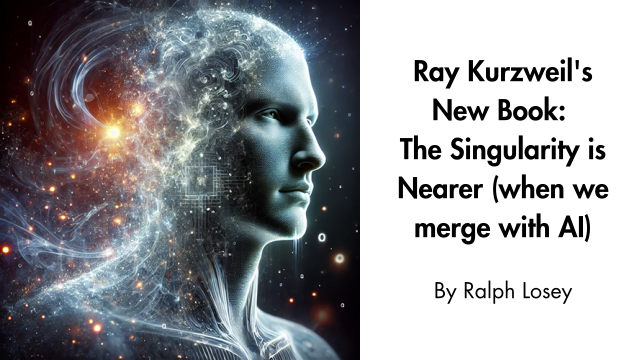
The Singularity Is Now: Are You Ready?
Introduction
Remember those sci-fi movies where robots became self-aware and started dictating terms? Or the ones where technology advanced so rapidly, humans struggled to keep up? Well, while we might not be battling sentient toasters (yet!), the idea behind those scenarios – the Singularity – is something we need to start thinking about *now*.
The Singularity, in its simplest form, is the hypothetical point in time when technological growth becomes uncontrollable and irreversible, resulting in unpredictable changes to human civilization. Sounds a little dramatic, right? Maybe. But the advancements we’re seeing in AI, biotechnology, and nanotechnology are happening at an exponential rate. The question isn’t *if* it’s coming, but *when* and *how* we can prepare.
Think of it like this: for centuries, progress was relatively slow and steady. We went from horse-drawn carriages to cars over decades. Now? We’re talking about self-driving cars becoming commonplace in the *next few years*. The pace of change is accelerating, and that acceleration is the key to understanding the potential (and the potential risks) of the Singularity.
Short-Term Shocks and Long-Term Shifts: What to Expect
Let’s break down what the Singularity might mean, both in the near future and further down the line.
Short-Term Impacts (The Next 5-10 Years):
- Job Market Disruption: AI is already automating tasks previously done by humans. This isn’t just about factory workers anymore; we’re seeing AI write articles, analyze data, and even perform basic legal tasks. The shift will demand new skills and create entirely new job categories, but it also means millions could face displacement.
- Information Overload on Steroids: The proliferation of AI-generated content, coupled with existing social media echo chambers, could lead to unprecedented levels of misinformation and distrust. Imagine trying to sift through countless articles and videos, unsure whether they were written by a human or a sophisticated algorithm designed to manipulate your opinions.
- Ethical Dilemmas in AI Development: As AI becomes more integrated into our lives, questions about bias, privacy, and accountability become critical. Who is responsible when a self-driving car causes an accident? How do we prevent algorithms from perpetuating existing societal biases? These are conversations we need to be having now.
- Increased Cybersecurity Threats: More sophisticated technology means more sophisticated cyber threats. AI could be used to develop highly targeted phishing attacks, crack encryption, and even launch autonomous cyber warfare.
Long-Term Shifts (The Next 20+ Years):
- Human Enhancement Technologies: Imagine a future where we can enhance our physical and mental capabilities through technology – from implantable chips that boost memory to genetic modifications that prevent disease. This raises profound ethical questions about what it means to be human and the potential for widening social inequalities.
- The Rise of Autonomous Systems: From self-governing cities to AI-powered healthcare systems, we could see a shift towards autonomous systems managing many aspects of our lives. While this could lead to greater efficiency and convenience, it also raises concerns about control, transparency, and the potential for unintended consequences.
- Redefining Work and Leisure: If AI can automate most tasks, what will humans do? We might see a shift towards a society focused on creativity, innovation, and personal growth, or we could face widespread unemployment and social unrest. The future of work is uncertain, but it’s something we need to start planning for now.
- The Unknown Unknowns: Perhaps the most significant impact of the Singularity is the potential for unforeseen consequences. The rate of change will make it increasingly difficult to predict the future, and we need to be prepared to adapt to unexpected challenges.
Preparing for the Inevitable: Practical Solutions for a Technological Future
Okay, so that sounds a little daunting. But don’t panic! The key to navigating the Singularity is proactive adaptation. Here are some practical solutions to help you (and society as a whole) prepare:
- Upskill and Reskill: Embrace Lifelong Learning
The most important thing you can do is invest in your own education and skills development. Focus on skills that are difficult for AI to replicate, such as critical thinking, creativity, emotional intelligence, and complex problem-solving.
- Example: Instead of just learning how to use a specific software program, learn the fundamentals of coding and data analysis. This will allow you to adapt to new technologies more easily.
- Case Study: Many universities and online learning platforms are offering courses and certifications in emerging technologies like AI, machine learning, and data science. Taking advantage of these opportunities can help you stay ahead of the curve.
- Foster Critical Thinking and Media Literacy
In a world of AI-generated content, it’s crucial to be able to distinguish fact from fiction. Develop your critical thinking skills by questioning everything you read and see online.
- Example: Before sharing an article on social media, take a moment to verify the source and look for evidence of bias or misinformation.
- Case Study: Organizations like the News Literacy Project are working to educate students and adults about how to identify and avoid fake news.
- Advocate for Ethical AI Development
We need to ensure that AI is developed and used in a responsible and ethical manner. This means supporting policies that promote transparency, accountability, and fairness in AI systems.
- Example: Contact your elected officials and let them know that you support regulations that require AI developers to address issues of bias and privacy.
- Case Study: The Partnership on AI is a collaboration between industry leaders, academics, and civil society organizations working to promote responsible AI development.
- Embrace Adaptability and Innovation
The future will be defined by rapid change and innovation. Be prepared to adapt to new situations, learn new skills, and embrace new technologies.
- Example: Don’t be afraid to experiment with new tools and technologies. Even if they don’t work out, you’ll learn something valuable.
- Case Study: Companies like Google and Amazon are constantly innovating and experimenting with new technologies. This allows them to stay ahead of the curve and adapt to changing market conditions.
- Focus on Human Connection and Community
In a world increasingly dominated by technology, it’s important to maintain strong human connections. Nurture your relationships with family and friends, and get involved in your community.
- Example: Make an effort to spend time with loved ones, participate in local events, and volunteer for causes you care about.
- Case Study: Studies have shown that strong social connections are essential for mental and physical health.
Alternative Approaches:
- The “Wait and See” Approach: Some people argue that the Singularity is overhyped and that we should simply wait and see what happens. While this may be a valid strategy for some, it’s important to be aware of the potential risks of being unprepared.
- The “Technological Optimism” Approach: Others believe that technology will ultimately solve all of our problems and that we should embrace it wholeheartedly. While technology certainly has the potential to improve our lives, it’s important to be aware of the potential downsides and to mitigate them accordingly.
- The “Technological Skepticism” Approach: Still others are skeptical of technology and believe that we should focus on preserving traditional values and ways of life. While there is certainly value in preserving the past, it’s also important to be open to new ideas and technologies.
The Future Is Ours to Shape
The Singularity may seem like a distant and abstract concept, but its implications are very real and very immediate. By taking proactive steps to prepare, we can ensure that technology is used to create a better future for all of humanity.
The journey ahead will be challenging, but it’s also filled with opportunities. Embrace lifelong learning, foster critical thinking, advocate for ethical AI development, embrace adaptability, and focus on human connection. By doing so, you can navigate the Singularity with confidence and help shape a future where technology empowers us all. Don’t be a passive observer. Be an active participant in shaping the future. The time to act is now.