
Science: Making Sense of a Universe That Doesn’t
Introduction
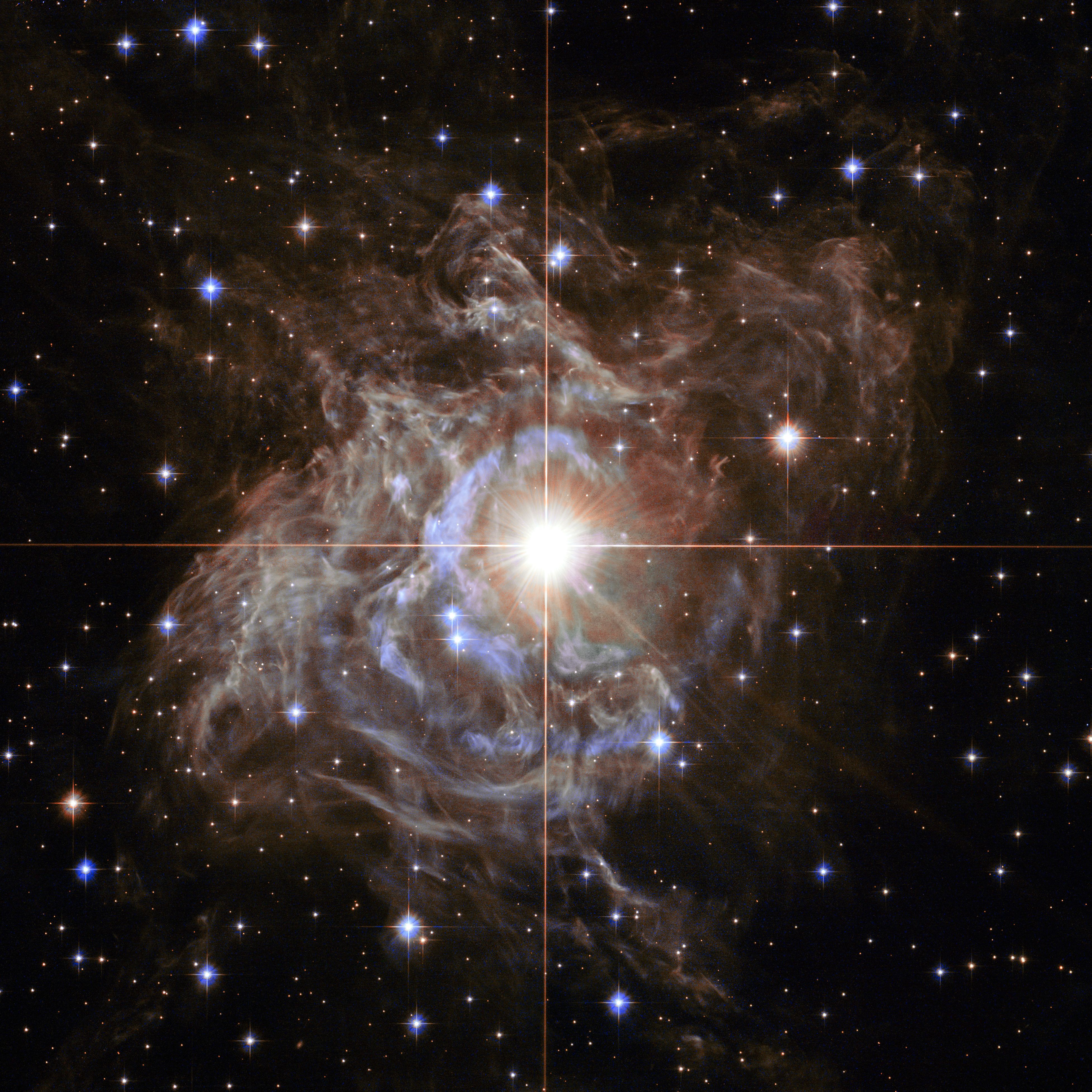
Have you ever stared up at the night sky, a canvas speckled with countless stars, and felt a strange mix of awe and… confusion? Like you’re looking at a puzzle with infinite pieces, and you’re not even sure what the picture’s supposed to be? You’re not alone. Science, in its relentless pursuit of understanding, often leads us to the unsettling realization that the universe isn’t always… well, sensible.
Explanation of the Problem
Think about it. Quantum mechanics, with its particles that can be in multiple places at once. General relativity, warping space and time around massive objects. Dark matter and dark energy, making up the vast majority of the universe, yet utterly invisible and mysterious. It’s enough to make your head spin.
But this apparent lack of “sense” is precisely what drives scientific progress. It’s the itch we can’t scratch, the question we can’t ignore. It’s the engine that propels us forward, forcing us to challenge our assumptions, develop new theories, and explore the unknown.
The Short-Term Stumbles and Long-Term Strides
The immediate impact of grappling with a universe that doesn’t always make sense can be frustrating, even disconcerting. Research dead ends, conflicting data, and the constant revision of established theories are all part of the process. Funding dries up, public interest wanes, and sometimes, brilliant ideas are dismissed simply because they challenge the status quo.
For example, consider the initial skepticism surrounding the theory of continental drift. Alfred Wegener, a German meteorologist, proposed in the early 20th century that the continents were once joined together and had slowly drifted apart. His evidence was compelling – the jigsaw-like fit of the continents, matching fossil records on different continents – but his lack of a plausible mechanism for the movement was met with resistance. It took decades of further research, fueled by a growing body of evidence, for plate tectonics to be accepted as a fundamental concept in geology.
In the long run, however, this struggle leads to profound breakthroughs. It pushes us to think outside the box, to develop new technologies and methodologies, and to refine our understanding of the fundamental laws of nature. The development of quantum mechanics, despite its initially baffling nature, revolutionized fields like electronics, medicine, and materials science. The pursuit of dark matter and dark energy, though still ongoing, has already yielded significant insights into the evolution of the universe and the nature of gravity.
Solutions
Making Sense of the Senseless: Practical Approaches
So, how do we navigate a universe that doesn’t always play by our rules? Here are a few practical approaches:
- Embrace the Unknown: The first step is to accept that there are things we don’t understand, and that’s okay. Instead of being discouraged by the complexity and apparent chaos, embrace it as an opportunity for discovery. Curiosity is the driving force of science. Don’t be afraid to ask “what if?” and challenge established norms.
- Develop a Systems Thinking Mindset: Complex systems, like the universe, are rarely understood by looking at individual components in isolation. We need to adopt a holistic approach, considering the interactions and feedback loops between different elements. Think of it like understanding a rainforest – you can’t just study individual trees; you need to understand the entire ecosystem. This is crucial in understanding fields like climate science, where interconnected factors create a complex, but not incomprehensible, system.
- Cultivate Interdisciplinary Collaboration: The biggest breakthroughs often occur at the intersection of different fields. Physicists, biologists, chemists, and mathematicians need to work together to tackle the grand challenges of the universe. The Human Genome Project, for example, required collaboration between biologists, computer scientists, engineers, and ethicists to map the entire human genome.
- Promote Open Science and Data Sharing: Scientific progress is accelerated when data and research findings are shared openly and transparently. This allows researchers to build upon each other’s work, identify errors more quickly, and accelerate the pace of discovery. The rise of open-source software and the development of online databases are examples of this trend.
- Invest in Education and Public Outreach: A scientifically literate public is essential for supporting scientific research and innovation. We need to invest in education programs that promote critical thinking, problem-solving, and scientific literacy. We also need to engage the public in scientific discourse, making complex concepts accessible and engaging.
Alternative Solutions and Approaches
Beyond these core strategies, consider these alternative approaches:
- Bayesian Reasoning: This statistical approach allows us to update our beliefs in light of new evidence. It’s a powerful tool for dealing with uncertainty and making decisions in complex situations.
- Agent-Based Modeling: This computational technique simulates the interactions of individual agents within a system to understand how collective behavior emerges. It’s useful for studying complex systems like social networks, ecosystems, and financial markets.
- Scenario Planning: This involves developing multiple plausible scenarios for the future and identifying the key factors that could lead to each scenario. It helps us prepare for uncertainty and make more robust decisions.
- Critical Thinking Training: This method trains individuals to analyze, evaluate, interpret, or synthesize information and apply creative thought to solving problems. By thinking clearly and rationally, you’ll be better positioned to make informed decisions.
Conclusion
The realization that the universe doesn’t always make sense can be unsettling, but it’s also incredibly liberating. It frees us from the constraints of preconceived notions and opens up a universe of possibilities. By embracing the unknown, cultivating interdisciplinary collaboration, and promoting open science, we can continue to push the boundaries of human knowledge and unravel the mysteries of the cosmos.
The journey may be challenging, but the potential rewards are immense. A deeper understanding of the universe can lead to technological breakthroughs, societal advancements, and a profound appreciation for the beauty and complexity of the world around us.
So, the next time you look up at the night sky and feel a sense of confusion, remember that you’re not alone. You’re part of a long and noble tradition of scientific inquiry, a quest to make sense of a universe that doesn’t always want to be understood. Embrace the challenge, ask questions, and never stop exploring. The universe is waiting to be discovered.