
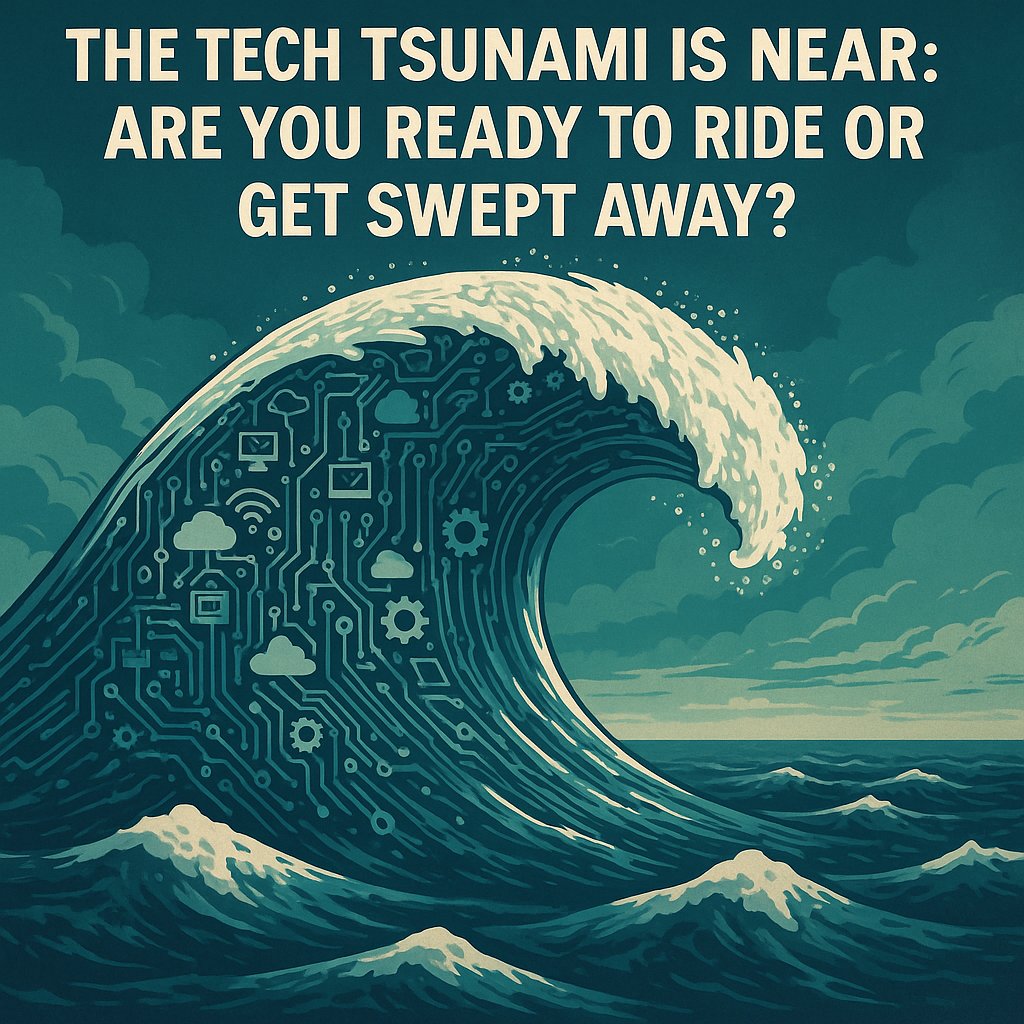
Tech’s Tsunami: Are You Ready?
Introduction
Remember that feeling when you first heard about the internet? Or when smartphones went from bulky bricks to pocket-sized powerhouses? Feels like a lifetime ago, right? Well, buckle up, because what’s coming next makes those shifts look like gentle ripples. We’re talking about a full-blown tech tsunami, and whether you’re a seasoned tech guru or just trying to keep up, it’s time to ask yourself: are you ready to ride the wave, or are you going to get swept under?
The Approaching Wave: What’s Causing the Commotion?
This isn’t just about faster processors or fancier gadgets. We’re talking about a convergence of technologies – artificial intelligence (AI), automation, blockchain, the Internet of Things (IoT), and quantum computing – all accelerating at warp speed. They’re not operating in silos; they’re feeding off each other, creating a synergistic effect that’s reshaping industries, jobs, and even the way we live.
Think about it:
- AI is becoming ubiquitous: From personalized recommendations on Netflix to chatbots handling customer service inquiries, AI is already deeply embedded in our daily lives. But its potential reaches far beyond. Imagine AI doctors diagnosing illnesses with unprecedented accuracy, or AI-powered cities optimizing traffic flow and energy consumption.
- Automation is redefining work: Forget robots just building cars on assembly lines. We’re talking about automating complex tasks in fields like finance, law, and even creative arts. This means some jobs will disappear, while others will be fundamentally transformed.
- Blockchain is revolutionizing trust: Beyond cryptocurrencies, blockchain technology offers a secure and transparent way to manage data, verify identities, and track supply chains. This could revolutionize everything from voting systems to international trade.
- IoT is connecting everything: From smart homes to industrial sensors, the Internet of Things is generating a massive amount of data that can be used to improve efficiency, productivity, and decision-making.
- Quantum Computing will solve complex problems: The technology will solve the most difficult problems in the world, from advanced medicine to finding new energy sources.
Short-Term Tremors: The Immediate Impacts You’ll Feel
The immediate impacts of this tech tsunami are already being felt across various sectors:
- Job displacement: Automation is already eliminating some repetitive and manual labor jobs, particularly in manufacturing, transportation, and customer service.
- Skills gap: As technology evolves, the skills needed to thrive in the workforce are changing rapidly. Many workers lack the digital literacy and technical skills needed to fill emerging roles.
- Increased competition: Technology is lowering barriers to entry for startups and small businesses, leading to increased competition in many industries.
- Data privacy and security concerns: As more data is collected and analyzed, concerns about privacy and security are growing. Data breaches and cyberattacks are becoming more frequent and sophisticated.
- Ethical dilemmas: AI and other advanced technologies raise complex ethical questions about bias, accountability, and the potential for misuse.
Long-Term Aftershocks: The Seismic Shifts on the Horizon
The long-term impacts of this tech tsunami could be even more profound:
- Restructuring of the workforce: The nature of work will continue to evolve, with more emphasis on creativity, critical thinking, and problem-solving skills.
- Transformation of education: Education systems will need to adapt to prepare students for the jobs of the future, with a focus on STEM skills, digital literacy, and lifelong learning.
- New business models: Traditional business models will be disrupted as technology enables new ways of creating value and delivering products and services.
- Social and economic inequality: The tech tsunami could exacerbate existing inequalities if access to technology and opportunities is not equitable.
- Evolution of human-machine interaction: As AI and other technologies become more integrated into our lives, the lines between humans and machines will become increasingly blurred.
Riding the Wave: Practical Solutions You Can Implement
So, how do you prepare for this tech tsunami? Here are some practical solutions you can implement:
- Upskill and Reskill:
- Identify in-demand skills: Research the skills that are most in-demand in your industry and consider taking courses or workshops to acquire those skills. Some popular options include data analysis, machine learning, cloud computing, and cybersecurity.
- Embrace lifelong learning: Commit to continuous learning throughout your career. Take advantage of online learning platforms like Coursera, Udemy, and edX to stay up-to-date on the latest technologies and trends.
- Seek out mentorship: Find a mentor who can provide guidance and support as you navigate the changing tech landscape.
Example: Sarah, a marketing professional, noticed that her company was increasingly relying on data analytics to inform its marketing campaigns. She enrolled in an online data analytics course and learned how to use tools like Tableau and Google Analytics. As a result, she was able to contribute more effectively to her team and advance her career.
- Embrace Automation (Strategically):
- Identify tasks that can be automated: Look for repetitive, time-consuming tasks that can be automated using software or AI.
- Invest in automation tools: Explore different automation tools and choose the ones that are best suited for your needs. Some popular options include robotic process automation (RPA) software, chatbots, and marketing automation platforms.
- Focus on higher-value tasks: As automation takes over routine tasks, focus on developing skills that are difficult to automate, such as creativity, critical thinking, and problem-solving.
Example: A small business owner used a chatbot to handle customer inquiries on their website. This freed up their customer service team to focus on more complex issues and improve the overall customer experience.
- Build a Digital-First Mindset:
- Embrace digital tools and platforms: Learn how to use digital tools and platforms effectively, including cloud computing, social media, and collaboration software.
- Be open to experimentation: Don’t be afraid to try new technologies and experiment with different approaches.
- Stay informed about digital trends: Follow industry publications, attend webinars, and network with other professionals to stay up-to-date on the latest digital trends.
Example: A real estate agent embraced social media marketing to reach a wider audience and generate leads. They created engaging content, ran targeted ads, and used social media analytics to track their results.
- Prioritize Data Privacy and Security:
- Understand data privacy regulations: Familiarize yourself with data privacy regulations such as GDPR and CCPA, and ensure that your practices comply with these regulations.
- Implement strong security measures: Implement strong security measures to protect your data from breaches and cyberattacks, including firewalls, antivirus software, and multi-factor authentication.
- Educate yourself about cybersecurity: Take courses or workshops to learn about cybersecurity best practices and how to protect yourself from online threats.
Example: A healthcare provider implemented strong data security measures to protect patient data from cyberattacks. They also trained their employees on cybersecurity best practices and conducted regular security audits.
- Foster a Culture of Innovation:
- Encourage experimentation: Create a culture where employees are encouraged to experiment with new technologies and ideas.
- Embrace failure: Recognize that failure is a part of the innovation process and encourage employees to learn from their mistakes.
- Collaborate with others: Collaborate with other organizations and individuals to share knowledge and resources.
Example: A tech company created an innovation lab where employees could experiment with new technologies and develop new products and services. The lab fostered a culture of creativity and collaboration, and it led to the development of several successful new products.
Alternative Approaches:
- Focus on soft skills: Develop strong communication, collaboration, and problem-solving skills, as these skills will be increasingly important in the future workforce.
- Build a strong network: Network with other professionals in your industry to share knowledge and learn from each other.
- Seek out opportunities for professional development: Attend conferences, workshops, and seminars to stay up-to-date on the latest technologies and trends.
- Consider a career change: If your current job is at high risk of automation, consider pursuing a career in a field that is less likely to be automated.
The Choice is Yours: Be Proactive, Not Reactive
The tech tsunami is coming, there’s no denying it. But unlike a natural disaster, this one offers opportunities for growth, innovation, and even a brighter future. The key is to be proactive, not reactive. Embrace the change, learn new skills, and adapt to the evolving landscape. Don’t be afraid to experiment, collaborate, and think outside the box.
The future is not something that happens to us; it’s something we create. By taking action today, you can ride the tech tsunami to success and help shape a better tomorrow for yourself, your community, and the world. So, are you ready to dive in?